When you upload files to a cloud service, where do they physically go? The answer matters more than you might think – especially for businesses dealing with regulations, contracts requiring specific data locations, or simply wanting to know where their information lives.
What Is Data Residency?
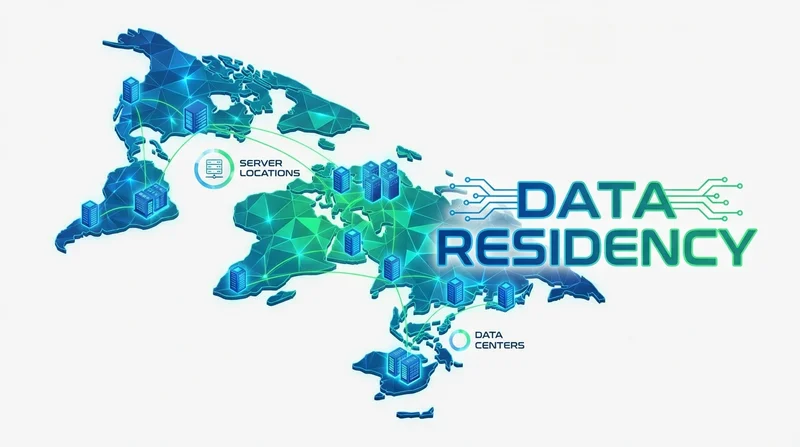
Data residency refers to the physical location where data is stored. When you upload a file to cloud storage, it's saved on servers in data centers somewhere in the world. That "somewhere" is data residency.
Related Concepts
- Data sovereignty – Legal jurisdiction governing data based on its location
- Data localization – Laws requiring data to stay within specific borders
- Data transfer – Moving data across geographic boundaries
Why Data Residency Matters
Legal and Regulatory Compliance
Many regulations have data location requirements:
- GDPR (EU) – While not strictly requiring EU storage, transferring personal data outside the EU requires specific legal mechanisms. See our GDPR compliance guide.
- HIPAA (US healthcare) – Doesn't specify location but requires specific safeguards. See our HIPAA compliance guide.
- National laws – Russia, China, and others require certain data to remain within borders.
- Industry regulations – Financial services, government contractors may have specific requirements.
Contractual Requirements
Your clients or partners may require:
- Data stored only in specific countries
- Data not stored in certain countries
- Proof of data location
Performance Considerations
Data stored closer to you typically means:
- Faster uploads and downloads
- Lower latency
- Better performance for frequent access
Where Major Services Store Data
GetShared
GetShared stores data in EU data centers (primarily Germany and Netherlands), with 3x redundancy across multiple facilities. This makes it suitable for EU data residency requirements.
Google Drive
Data can be stored in various global locations. Google Workspace admins can choose data regions (US, Europe, or global).
Dropbox
Primarily US data centers. Dropbox Business allows EU data residency option for teams.
Microsoft OneDrive
Data location depends on your tenant location. EU tenants typically have data in EU data centers.
Amazon S3
User selects region explicitly. Data stays in selected region unless transferred.
Understanding Data Transfer
Even if your primary storage is in one location, data might be transferred to other locations for:
- CDN delivery – Faster access from global edge servers
- Backup/redundancy – Copies in other regions
- Processing – Some operations may happen in different locations
- Support access – Staff in other regions may access data
Understand not just where data is stored, but where it might travel.
Questions to Ask Cloud Providers
About Storage
- Where are your data centers located?
- Can I choose my data region?
- Are backups stored in the same region?
- Is there redundancy across regions?
About Transfers
- Is data transferred outside my region for any purpose?
- Does your CDN cache data in other countries?
- Where is data processing performed?
About Compliance
- What certifications do you have? (ISO 27001, SOC 2, etc.)
- Do you have a Data Processing Agreement (DPA)?
- How do you handle cross-border transfer requirements?
GDPR and Data Transfers
GDPR has specific rules about transferring personal data outside the EU:
Adequate Countries
Some countries have "adequacy decisions" allowing free data transfer: UK, Switzerland, Japan, Canada (commercial), and others.
Standard Contractual Clauses (SCCs)
Legal contracts that allow transfer to other countries with appropriate safeguards.
Privacy Shield Replacement
The EU-US Data Privacy Framework provides a mechanism for US transfers, replacing the invalidated Privacy Shield.
For simplicity, many EU organizations prefer services that store data within the EU.
Choosing Based on Data Residency
If You Need EU Data Residency
Choose services that:
- Have EU data centers
- Allow you to select EU storage
- Don't transfer data outside EU for processing
GetShared's EU-based infrastructure is ideal for European data residency requirements.
If You Need US Data Residency
Choose services that:
- Have US data centers
- Are US-based companies (subject to US law)
- Can provide US-only data storage
If You Need Specific Country Storage
Options are more limited. Look for:
- Enterprise plans with region selection
- Local providers
- Self-hosted solutions
Data Residency for Different Use Cases
Personal Use
Data residency is less critical, but consider:
- Which country's laws govern your data
- Whether government access concerns you
- Performance (nearby storage is faster)
Small Business
Consider:
- Where your customers are located
- Whether you handle personal data from EU residents
- Client contract requirements
Enterprise
Thoroughly evaluate:
- All regulatory requirements
- Data classification by sensitivity
- Different storage for different data types
- Audit requirements
Documenting Data Residency
For compliance purposes, document:
- What services you use
- Where each stores data
- What data goes to each service
- Legal basis for any cross-border transfers
- Data Processing Agreements in place
GetShared's Data Residency
GetShared stores all data in European Union data centers:
- Primary storage – Germany
- Redundancy – Netherlands
- 3x redundancy – Multiple copies within EU
- No US transfer – Data stays in EU
- GDPR compliant – Full compliance with EU regulations
This makes GetShared ideal for:
- EU organizations
- Companies serving EU customers
- Anyone preferring EU legal jurisdiction
Conclusion
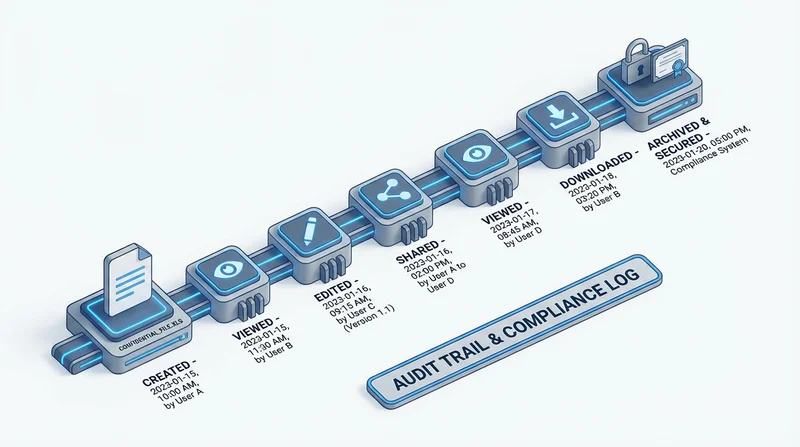
Data residency is increasingly important in our globalized yet regulated world. Understanding where your files are stored helps you:
- Meet legal and regulatory requirements
- Satisfy client contracts
- Protect sensitive information
- Make informed decisions about cloud services
GetShared's EU-based infrastructure provides clear data residency for organizations that need it. Learn more about our security and compliance features.